Archives | Authors | Wole Soyinka
Wole Soyinka Nigeria PWF 2020, 2006
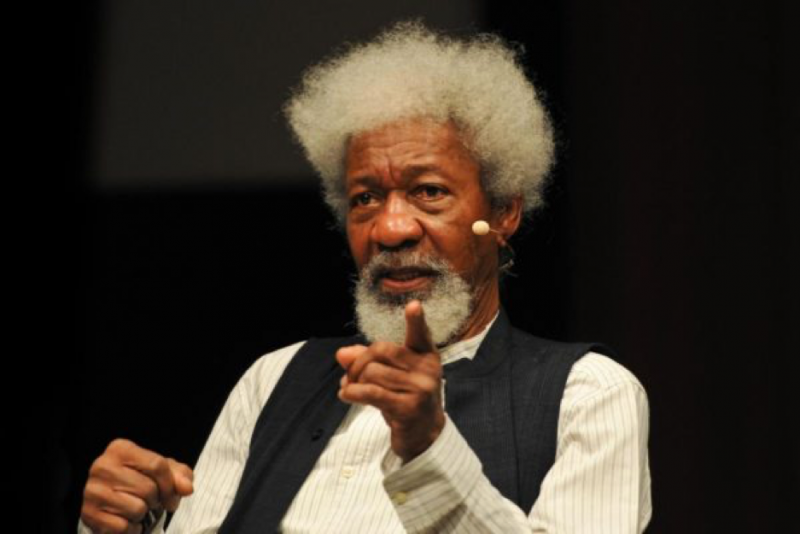
...
“Traveler, you must set forth at dawn. I promise marvels of the holy hour.”
Nobel laureate Wole Soyinka was born in 1934 in Abeokuta, Western Nigeria. Imprisoned several times in Nigeria for his opposition to corruption and dictatorship, he is often seen in the revolving doors of exile and return. For Soyinka, “justice is the primary condition of humanity.”
Few writers match the consistency of his human rights advocacy or equal his moral courage. “Power cannot stand freedom. The axis of world history is at one end power, at the other end, freedom.”
In the sequence Chimes of Silence composed during the Nigerian Civil War, Wole Soyinka opposes “futile answers and barren knowledge”.
Decades later, in Of Africa, we hear the refrain from the new refiners of doctrine: “Actualize power, then fictionalize the people.”
Wole Soyinka’s work includes: the classic memoirs: The Man Died, Aké: The Years of Childhood, and You Must Set Forth at Dawn; the poetry collections: A Shuttle in the Crypt, and Mandela’s Earth; drama: The Swamp Dwellers, A Dance of the Forests, and Requiem for a Futurologist; and The Man Lives, a conversation with Okey Ndibe.
Famously busy, Wole Soyinka is rarely seen at his country home near Abeokuta.
The Ills of The World: On Wole Soyinka
23.09.2020
By Joshua Jones, a poet and Festival's literary critic.
Wole Soyinka will be a guest of the 30th Prague Writers' Festival. You can find more details in program.
-5f33fc82c5944_126x95.jpg "Wole Soyinka (zdroj: Punch Newspapers)")
Wole Soyinka: Aké
12.08.2020
In October we will be honoured to host Wole Soyinka, the Nobel Prize laureate. We publish a magical excerpt from his memoir Aké: The Years of Childhood.
Wole Soyinka: Speech at the Nobel Banquet
01.10.2008 Readings
Your Majesties, Ladies and Gentlemen,
It was inevitable that the Nordic world and the African, especially that part of it which constitutes the Yoruba world - should meet at the crossroads of Sweden. That I am the agent of such a symbolic encounter is due very simply to that my creative Muse is Ogun, the god of creativity and destruction, of the lyric ...
Wole Soyinka: Nobel Lecture
01.10.2008 Readings
This Past Must Address Its Present
A rather curious scene, unscripted, once took place in the wings of a London theatre at the same time as the scheduled performance was being presented on the actual stage, before an audience. What happened was this: an actor refused to come on stage for his allocated role. Action was suspended.
_150x94.jpg "Wole Soyinka")
Wole Soyinka: Running to Stand Still
01.10.2008 Interviews
“I am a glutton for tranquility,” says Wole Soyinka. The 72-year-old Nigerian writer claims he would like nothing more than to retreat to his childhood home and spend his days in seclusion.
Wole Soyinka: Transforming Myth
29.01.2008 Readings
Wole Soyinka is among contemporary Africa's greatest writers. He is also one of the continent's most imaginative advocates of native culture and of the humane social order it embodies. Born in Western Nigeria in 1934, Soyinka grew up in an Anglican mission compound in Aké. A precocious student, he first attended the parsonage's primary school, where his father was headmaster, and then a nearby grammar school in Abeokuta, where an uncle was principal. Though raised in a colonial, English-speaking environment, Soyinka's ethnic heritage was Yoruba, and his parents balanced Christian training with regular visits to the father's ancestral home in `Isarà, a small Yoruba community secure in its traditions.
Wole Soyinka: Exile's Return
29.01.2008 Articles
"You Must Set Forth at Dawn: A Memoir" by Wole Soyinka
Yoruba home country, highly educated, with passionate expectations for a free and democratic Nigerian state, he was at university in Britain during the years just preceding the independence that would be brokered into existence in 1960. ...
Wole Soyinka at the PWF 2006
25.01.2008
Wole Soyinka was born in 1934 in Abeokuta in western Nigeria. He attended the University of Ibadan before relocating to England to study at the University of Leeds.
The Children of This Land
24.01.2008 Readings
The children of this land are old
Their eyes are fixed on maps in place of land
Their feet must learn to follow
Distant contours traced by alien minds
Their present sense has faded into past.



-6507dcf8af9e0_160x60.jpg)